Publications /
Opinion
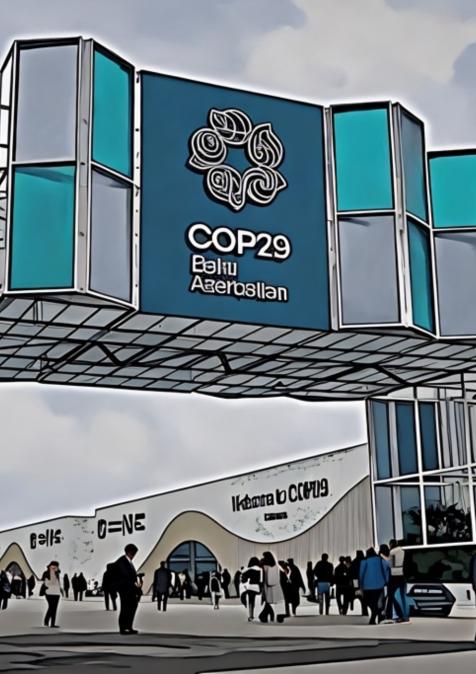
The agreement reached at COP 29 to provide $300 billion annually in climate financing to developing countries (excluding China) by 2035 marks a significant milestone, tripling the previous target. Yet, the response from developing countries has been overwhelmingly negative. A statement from the group of least developed countries labeled the agreement “a staggering betrayal of the world’s most vulnerable.” Similarly, representatives from major developing countries like India and Nigeria expressed disappointment. Some observers even described the agreement as a “cop-out.”
Developing countries highlight three major concerns with the new agreement. First, the $300 billion target falls far short of the $1,300 billion estimated by the Independent High Level Expert Group on Climate Finance as necessary for effective climate action. Second, it is estimated that at least one-third of the previous $100 billion target was achieved by diverting funds from existing development projects rather than through new financing. The COP 29 agreement does not include safeguards to prevent this from reoccurring. Third, it fails to exclude the use of loans instead of grants to finance climate action in developing countries, which already face significant debt burdens. According to the World Bank, these countries (excluding China) pay $971.2 billion annually in debt service. Less than one-third of the $100 billion target was met through grants, with the remainder provided through loans, export credits, and guarantees.
The current climate finance system is no longer fit for purpose. Developed country governments face their own domestic budget pressures and are allocating more resources to support Ukraine and in-country refugees. As a result, they are unlikely to provide the trillions needed in the form of grants. Asking multilateral development banks (MDBs) to increase climate mitigation financing would almost certainly necessitate reallocating resources away from development projects. Meanwhile, the approximately 60 multilateral climate funds collectively provide only $3-5 billion annually, far from the trillions required.
A “Baku to Belem Roadmap to $1.3 Trillion” was incorporated into the COP 29 agreement as a plan to address unresolved issues ahead of COP 30 in Belem, Brazil. This roadmap provides an opportunity to discuss and negotiate changes and enhancements to the climate finance architecture that could align the interests of both developing and developed countries. Two key proposals should be considered: (1) the introduction of a debt-for-climate mechanism as part of the G20’s Common Framework for debt restructuring; and (2) the establishment of an International Green Bank to finance mitigation projects.
A debt-for-climate mechanism could redirect some of the nearly $1 trillion currently used for developing country debt service into climate mitigation efforts. This mechanism, managed by the IMF and the World Bank, could complement the G20’s Common Framework by reducing developing countries’ debt obligations, provided that the savings from reduced debt service are allocated to agreed-upon mitigation projects. Public and publicly guaranteed debt in developing countries (excluding China) currently totals approximately $3.3 trillion, comprising $1.3 trillion owed to bondholders, $1.2 trillion to official multilateral lenders, $0.5 trillion to official bilateral donors, and $0.3 trillion to banks and other private creditors. For such a mechanism to succeed, multilateral lenders must actively participate, as they did in the Highly Indebted Poor Countries (HIPC) Initiative. Additionally, the sovereign debt restructuring framework must be strengthened to ensure bondholder participation, addressing a critical gap in current mechanisms.
The world needs a Green Bank to identify, prepare, finance and oversee the implementation of mitigation projects in developing countries. This institution would streamline the fragmented climate finance landscape by replacing most of the sixty or so existing funds. Structured as a public-private partnership, the Green Bank would feature a governance model distinct from traditional MDBs. It could operate as an independent institution or as part of the World Bank Group. Importantly, its governance would ensure equal representation for developing and developed countries, while also giving the private sector a voice. The Green Bank would exclusively finance private-sector mitigation projects through equity investments, loans and guarantees, ensuring it does not contribute to the public debt burdens of developing countries.
Although the international community is generally averse to creating new institutions, the existential threat of climate change necessitates bold and innovative responses. The urgency of climate change underscores the necessity of rethinking the international financial architecture, including the establishment of a Green Bank. Should achieving international consensus prove challenging in the short term, regional initiatives could provide viable alternatives. For instance, the African Development Bank’s latest report advocates for the creation of an African Green Bank.
By emphasizing the definition of a “new collective quantitative goal on climate financing (NCQG),” COP 29 has illuminated significant shortcomings in the global climate finance system. The agreement on the “Baku to Belem Roadmap” offers a critical opportunity to devise innovative solutions to address these challenges. The pressing question remains: will governments around the world demonstrate the political will to seize this moment for transformative change?