Publications /
Policy Brief

Back
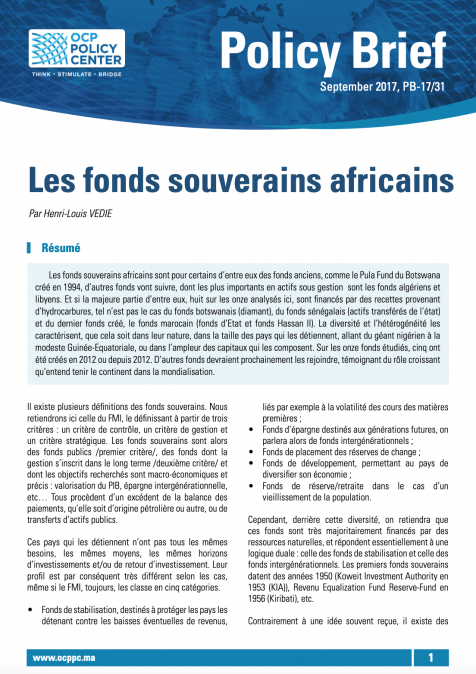
Les fonds souverains africains
September 17, 2017

Les fonds souverains africains sont pour certains d’entre eux des fonds anciens, comme le Pula Fund du Botswana créé en 1994, d’autres fonds vont suivre, dont les plus importants en actifs sous gestion sont les fonds algériens et libyens. Et si la majeure partie d’entre eux, huit sur les onze analysés ici, sont financés par des recettes provenant d’hydrocarbures, tel n’est pas le cas du fonds botswanais (diamant), du fonds sénégalais (actifs transférés de l’état) et du dernier fonds créé, le fonds marocain (fonds d’Etat et fonds Hassan II). La diversité et l’hétérogénéité les caractérisent, que cela soit dans leur nature, dans la taille des pays qui les détiennent, allant du géant nigérien à la modeste Guinée-Equatoriale, ou dans l’ampleur des capitaux qui les composent. Sur les onze fonds étudiés, cinq ont été créés en 2012 ou depuis 2012. D’autres fonds devraient prochainement les rejoindre, témoignant du rôle croissant qu’entend tenir le continent dans la mondialisation.


RELATED CONTENT

  • October 09, 2026
    Can Nigeria’s Dangote refinery help strengthen Africa’s energy security amid disruptions to global supply routes? This discussion considers how expanding local refining capacity can reduc ...
  • Authors
    Paul Isbell
    October 9, 2026
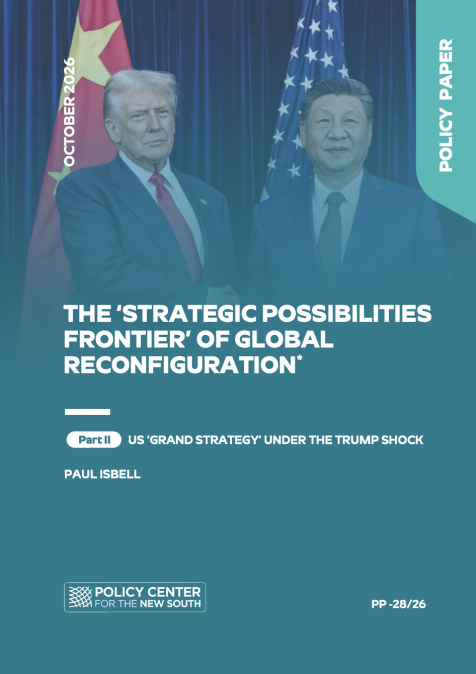
    In the first seven Policy Briefs of this ongoing series of analysis on Pan-Atlanticism: The Atlantic Basin in a Multipolar-Transnational World, we developed the argument that the strategic significance of the Atlantic Basin is on the rise for a range of international actors (states, regions and non-state agents) and from distinct political or ideological perspectives. In addition, in the most recently published Policy Brief -- “The U.S. and the Current International Reconfiguration: ...
  • October 8, 2026
    This paper was originaly published on Higher Education Policy Journal This article critically assesses the alignment between Morocco’s public guidance schemes for international students and its national development goals. Specifically, it investigates the capacity of these mechanisms to transform student mobility from a potential ‘brain drain’ into a tangible ‘brain gain’. Employing a qualitative case study approach, we conducted a systematic content analysis of 204 mobili ...
  • Authors
    Marie-Noelle Nwokolo
    October 6, 2026
    The author of this opinion, Marie-Noelle Nwokolo, is a 2024 alumna of the Atlantic Dialogues Emerging Leaders Program.In September 1978, delegations from 138 countries gathered in Buenos Aires, Argentina, around a powerful idea: developing countries had knowledge, experience and capabilities worth sharing with one another. The Buenos Aires Plan of Action gave institutional form to what we now call South-South Cooperation, part of a wider post-colonial effort by developing ...
  • Authors
    October 2, 2026
    Le Cameroun dispose d'importants gisements de minerais, notamment de fer, de la bauxite, d'or, de cobalt, de nickel, de manganèse, de calcaire, de marbre, de diamants, entre autres. L'industrie minière du pays est restée dominée par l'exploitation artisanale et à petite échelle, en particulier l'orpaillage, tandis que les hydrocarbures ont représenté l'essentiel des recettes issues des industries extractives. Le pays cristallise ainsi le paradoxe africain : malgré l’ampleur et la di ...
  • September 28, 2026
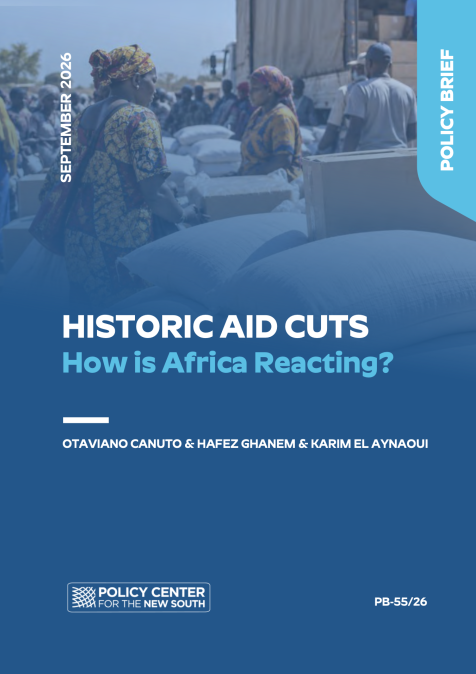
    This paper was initially published in French on the website of the Fondation Jean-Jaurès. There was a historic decline in Official Development Assistance (ODA) in 2025. Foreign aid to developing countries from members of the OECD-DAC fell by some 23%, the largest decline on record and the second consecutive annual decline. Aid to Africa fell by more than 25%. The International Monetary Fund (IMF) described this decline in ODA to Africa as “a shock like no other.” It differ ...
  • September 25, 2026
    Dans cet épisode d’Africafé, Amadou Diop analyse les défis de sécurité maritime auxquels font face les pays de l’Afrique atlantique, de la piraterie aux trafics transfrontaliers. Il souligne la nécessité de mutualiser les moyens et de partager l’information entre États. L’échange aborde...
  • Authors
    Luladay Berhanu Mengistie
    Guillaume Gérout Suominen
    September 21, 2026
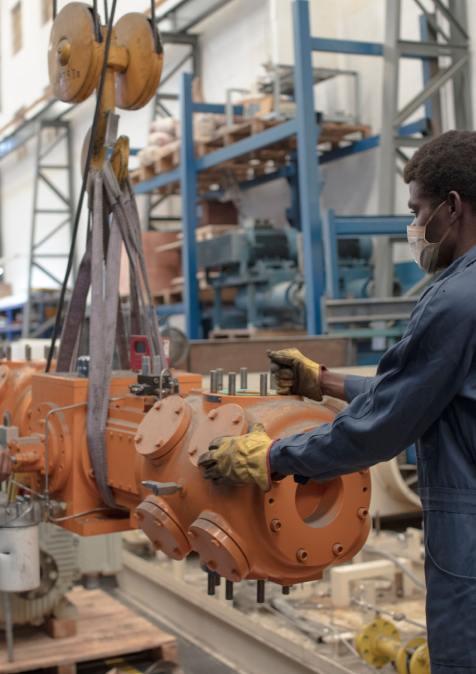
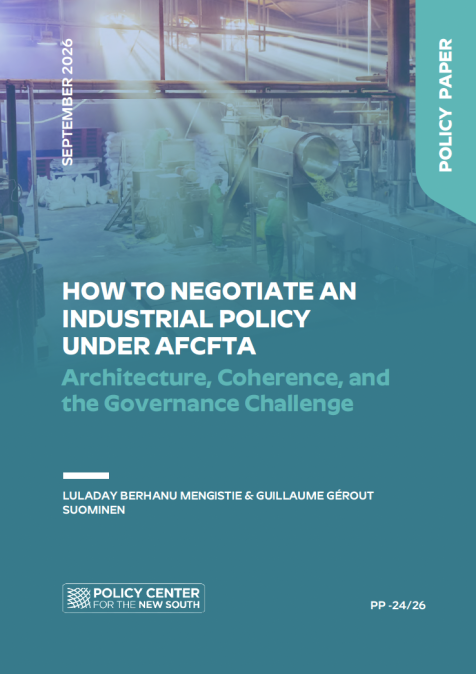
    The African Union Summit of February 2026 instructed the African Continental Free Trade Area (AfCFTA) Council of Ministers to negotiate a Protocol on Industrial Policy and Development. This work, handled without adequate preparation, is likely to reproduce the weaknesses it is meant to remedy. This paper is a conceptual mapping exercise, written to raise the preparatory questions before drafting begins, rather than to prescribe outcomes.It proceeds in five sections:1. It works towar ...