Publications /
Policy Paper
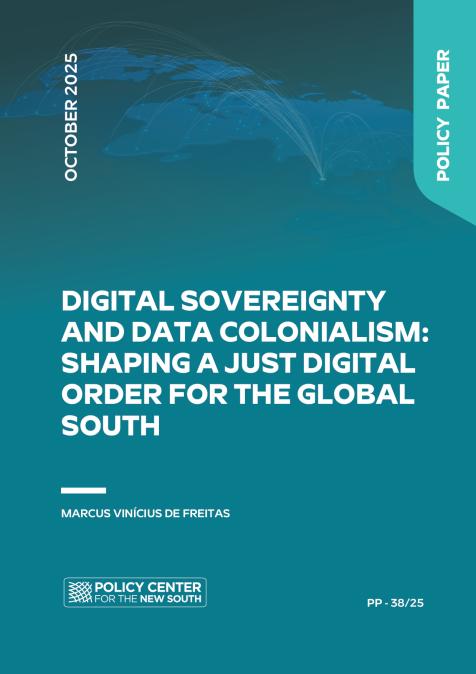
This policy paper examines digital colonialism as a defining structural challenge of the twenty-first century and argues for the urgent pursuit of digital sovereignty in the Global South. While digitalization holds immense potential to foster inclusion and bridge development gaps, current dynamics reproduce historical patterns of dependency: data is extracted from Southern populations, routed through infrastructures owned by Northern corporations, processed by algorithms trained on foreign datasets, and monetized abroad. These asymmetries in infrastructure, knowledge, and economic power entrench global hierarchies, undermining sovereignty and perpetuating inequality.
The analysis situates digital dependency within broader theoretical frameworks, including dependency theory and surveillance capitalism, showing how informational empires now shape behavior, politics, and markets in ways that compromise autonomy. Case studies from Africa, Latin America, Asia, and the Middle East illustrate both vulnerabilities and opportunities—from Kenya’s M-Pesa and Brazil’s PIX to India’s UPI and South Africa’s POPIA.
The paper concludes by advancing a normative agenda for a just digital order, centered on regional cooperation and investment in indigenous infrastructures. It highlights the need to safeguard community data rights and proposes the convening of a Digital Bandung as crucial steps in the journey of the Global South from digital consumer to digital co-author. Taken together, they will help ensure dignity, autonomy, and multipolarity in the digital age.