Podcasts

Back

European Energy Security Priorities 2016

08
March 2016
Michael Leigh 

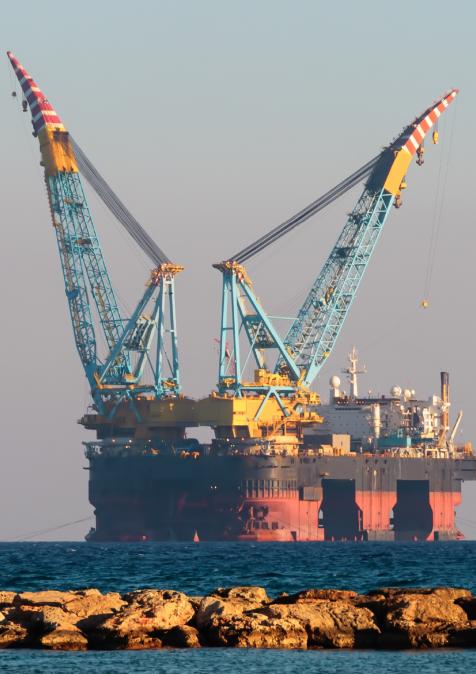
This podcast is performed by Michael Leigh. As we enter 2016, Europe's energy situation will face many political and security challenges. Sir Michael Leigh will review in this presentation the goals of European Commission’s energy union and discuss some of the political obstacles that will need to be overcome if it is to advance. Much of this relates to Russia, given the push to diversify sources, and the tensions over Nord Stream II among other mounting pressures. Michael Leigh will also look at energy developments in the Eastern Mediterranean and their implications for the region and Europe.

RELATED CONTENT

  • Authors
    Loubna Eddallal
    August 13, 2026
    The renewed instability in the Middle East has exposed Africa's continued vulnerability to external energy shocks. Shipping disruptions through the Strait of Hormuz, the maritime chokepoint through which roughly one-fifth of global oil and LNG supplies transit, have once again demonstrated that African fuel security remains highly dependent on geopolitical developments beyond the continent. While many African economies have traditionally relied on refined petroleum imports from Gulf ...
  • Authors
    August 12, 2026
    La géographie mondiale des hydrocarbures n'est évidemment pas figée. De nouveaux producteurs de pétrole et/ou de gaz naturel apparaissent suite à des découvertes, le plus souvent réalisées par des compagnies pétrolières internationales. On pense notamment au Mozambique, qui produit et exporte du gaz naturel liquéfié (GNL) depuis la fin 2022, au Sénégal, qui est un producteur de pétrole offshore depuis la mi-2024, et au Sénégal et à la Mauritanie, qui sont devenus conjointement expor ...
  • Authors
    August 5, 2026
    This paper addresses the persistent challenge of resource dependence in the world's poorest countries, focusing on the ten poorest African nations where natural- resource rents average 14% of income. It argues that four decades of conventional policy advice, which treated resource dependence primarily as a revenue management problem, have failed to help these countries. While stabilization funds and permanent-income frameworks aim to smooth consumption, they do not answer the fundam ...
  • Authors
    July 17, 2026
    The close relationship between energy and geopolitics is well established. The same holds true for several armed conflicts. In recent years, however, the conflict most closely intertwined with energy has been the 2026 Iran War, which began on February 28. A ceasefire has been in effect since April 8, and a Memorandum of Understanding (MoU) was signed by Iran and the United States on June 17. Nevertheless, as demonstrated by Iran's attacks on commercial vessels and recent U.S. strike ...
  • Authors
    July 17, 2026
    Les relations, très étroites, entre l’énergie et la géopolitique sont bien connues. Cela vaut aussi pour plusieurs conflits armés. Mais, dans la période récente, le conflit le plus lié à l’énergie est la guerre d’Iran de 2026, qui a débuté le 28 février. Un cessez-le-feu est en vigueur depuis le 8 avril et un protocole d’accord a été signé le 17 juin par l’Iran et les États-Unis. Mais, comme le montrent les attaques de l’Iran contre des navires et les frappes américaines de ces dern ...
  • Authors
    July 13, 2026
    On “marinetraffic.com”, thousands of triangles fill a map of the world’s ports and oceans, each representing the active location and destination of a ship, reported the “McGill International Review” (April 16, 2026) adding,” suspicious tankers are plentiful among them.” One of these vessels, marked by a red triangle, appears, zoomed, as “Monique”, a twenty-year-old vessel, aka Tokyo, Phuket and Elysia. Its old age and the frequent name change, suspects reporter Julnar Alzuki, “indic ...
  • Authors
    July 2, 2026
    Africa is facing a massive electricity deficit that is impacting its economic and social development, and its ability to catch up with the rest of the world. It is imperative that the continent increase its electricity production to connect the 600 million people who are currently without access and to improve the quality of service for the millions who are suffering from frequent blackouts and load-shedding. Economic development in the 21st century will crucially depend on the digi ...
  • June 11, 2026
    The global energy system has entered a period of acute structural stress following the strikes by the United States and Israel on Iran in late February 2026, and the subsequent disruption of flows through the Strait of Hormuz. According to the International Energy Agency, the resulting shock marks the most severe disruption to global energy markets since the 1970s oil crises, with systemic characteristics comparable to the combined effects of those crises and the 2022 Russia-Ukraine ...
  • Authors
    June 8, 2026
    The energy shock caused by the war between the United States and Israel and Iran has highlighted the need for Africa to refine more of its own crude oil. Africa is a net hydrocarbon exporter, but remains stuck in the old colonial economic model: it mostly exports raw materials and imports refined products. Africa exports about 2.6 billion barrels of crude oil every year, and imports about 1.4 billion barrels of refined products. This is a problem for two reasons. First, Africa ...