The impact of COVID-19 in Ethiopia and Africa - Interview of Yonas Adeto by Mohammed Loulichki

April 9, 2020

‪In an interview with Mohammed Loulichki, the director of the Institute for Peace and Security Studies, Yonas Adeto, gives his thoughts on the measures taken in Ethiopia and Africa.

Speakers
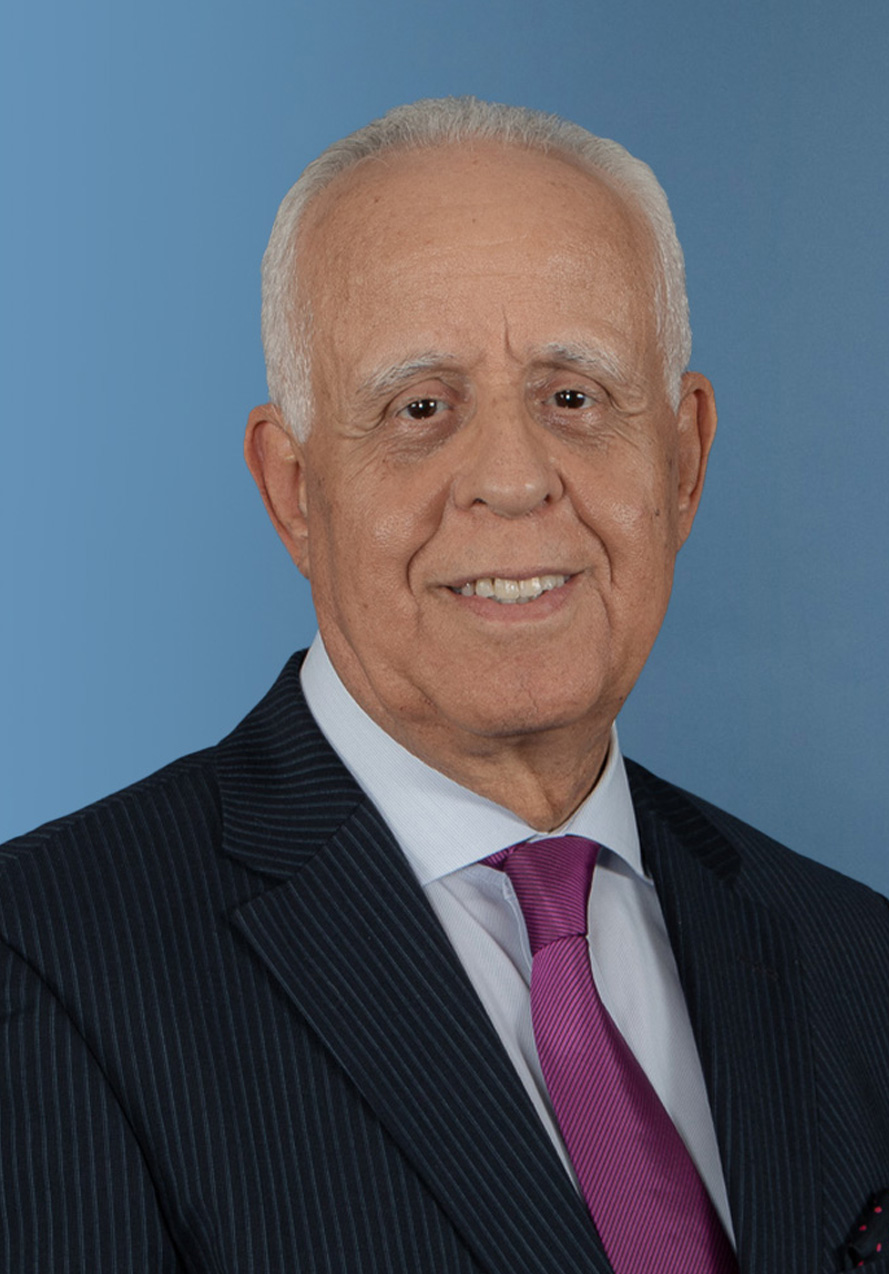
Mohammed Loulichki
Senior Fellow
Mohammed Loulichki is a Senior Fellow at the Policy Center for the New South and an Affiliate Professor at Mohammed VI Polytechnic University. He brings over 40 years of comprehensive experience in diplomacy, conflict resolution, and human rights. He has served in various roles including as a member and Deputy Head of the Moroccan delegation to the 3rd Conference on the Law of the Sea (1982-1990), Head of the Department of Legal Affairs and Treaties at the Ministry of Foreign Affairs (1988-1991), and General Director for Multilateral Affairs in the same ministry (2003-2006).   He also acted as Morocco's Ambassador to Hungary, Bosnia-Herzegovina, and Croatia (1995-1999), and was the Moroccan Government's Ambassador Coordinator with MINURSO (1999-2001). Furthermore, he se ...
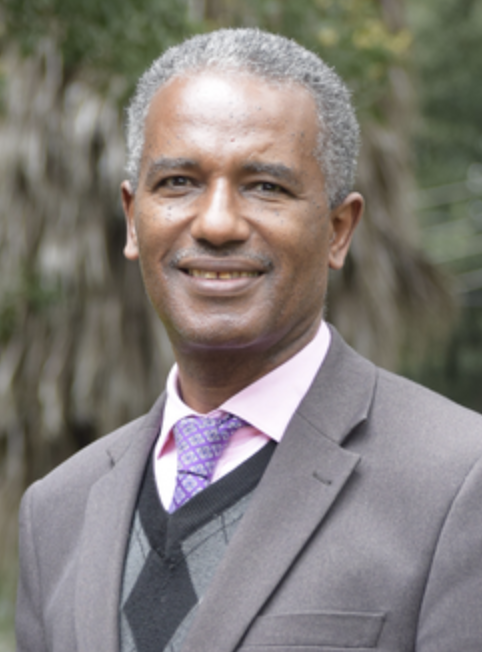
Yonas Adeye Adeto
Commissioner, the Ethiopian National Dialogue Commission and Former Director, Institute for Peace and Security Studies (IPSS)
Associate Professor of Peace Studies, Former Director, Institute for Peace and Security Studies (IPSS), Addis Ababa University (AAU); Current Commissioner, the Ethiopian National Dialogue Commission (ENDC). He has published peer reviewed articles in international journals, and edited book chapters on: Peacebuilding, Conflict Resolution, Security Sector Governance, Peace Education, Preventing Violent Extremism/Terrorism, Diplomacy, International Relations and Global as well as Regional Security. He has taught at Addis Ababa University over twenty-five years and is currently offering various courses related to theories, issues and praxis of Peace, Global and Regional Security to MA and PhD programmes at IPSS and elsewhere in Africa and beyond. Dr. Adeto holds a PhD in Peace Stud ...

RELATED CONTENT

  • Authors
    Fatima Ezzahra Mengoub
    February 20, 2026
    Après plus de sept années de sécheresse, le Maroc a connu durant l’hiver 2025–2026 des précipitations exceptionnellement abondantes, témoignant d’une variabilité hydrique de plus en plus marquée. Cette alternance rapide entre déficit chronique et excès ponctuels révèle le paradoxe hydrique national : un système historiquement centré sur la rareté doit désormais gérer des épisodes extrêmes concentrés et intenses.Les infrastructures hydrauliques ont limité les impacts humains et écono ...
  • February 19, 2026
    This Africafe's episode examines Brazil-Africa relations: historical ties shaped by the slave trade and diaspora, Lula’s trade expansion, and competition with China/EU. It explores South-South diplomacy’s potential to reshape global institutions, the role of “South Atlanticism,” and fut...
  • Authors
    February 17, 2026
    La Marche Verte fait partie de ces moments féconds qui n’ont pas cessé d’influer sur le cours des événements politiques du Maroc, par la place qu’elle a prise, dès le départ, dans la longue durée, le contexte dans lequel elle s’est déployée, la logique des interactions dans laquelle elle s’est inscrite par ses causes et ses effets, et comme une des figures éclatantes du récit national. ...
  • February 17, 2026
    في هذه الحلقة، نناقش كيف ينسجم مسار إزالة الكربون من الصناعة المغربية مع التزامات المملكة المناخية، ومدى واقعية الأهداف المعلنة في ظل البنية الصناعية الحالية، كما نتناول آليات التمويل والحوافز الاقتصادية الممكنة لتسريع التحول دون التأثير على تنافسية المقاولات، خاصة في سياق تطبيق آلية تع...
  • February 13, 2026
    Le général Olivier Tramond analyse la réduction de la présence militaire française en Afrique comme un changement stratégique profond plutôt qu’un renoncement. Au-delà des coups d’État et ...
  • Authors
    Amine Ghoulidi
    February 5, 2026
    This Paper was originally published on orient-online.com  The Western Mediterranean’s exposure to the Sahel is usually framed in terms of security spillovers and crisis management. This paper argues that this framing misreads how Sahelian access conditions now shape Mediterranean integration. Morocco’s Atlantic Initiative is a state-led corridor strategy combining Atlantic port infrastructure, inland transit routes, and energy systems to connect landlocked Sahelian economi ...
  • January 29, 2026
    Le Mali, le Burkina Faso et le Niger, réunis au sein de l’Alliance des États du Sahel (AES), affirment l’ambition de bâtir une souveraineté nationale qui leur permettrait de s’émanciper de la domination et des influences extérieures et de se doter d’une liberté d’action dans les choix de développement politique et économique. Cependant, cette ambition se heurte à de nombreuses contraintes économiques et sécuritaires.La souveraineté ne peut se construire sans une base économique soli ...