From health Crisis to debt crisis : Should we be worried - Ugo Panizza

June 8, 2020

Ugo Panizza, Professor of International Economics at the Graduate Institute of Geneva, interviewed by our economist Badr Mandri, goes back over recent developments in sovereign debt, particularly in developing countries, and discusses some interesting analytical issues that have emerged in this context of the coronavirus crisis.

Speakers
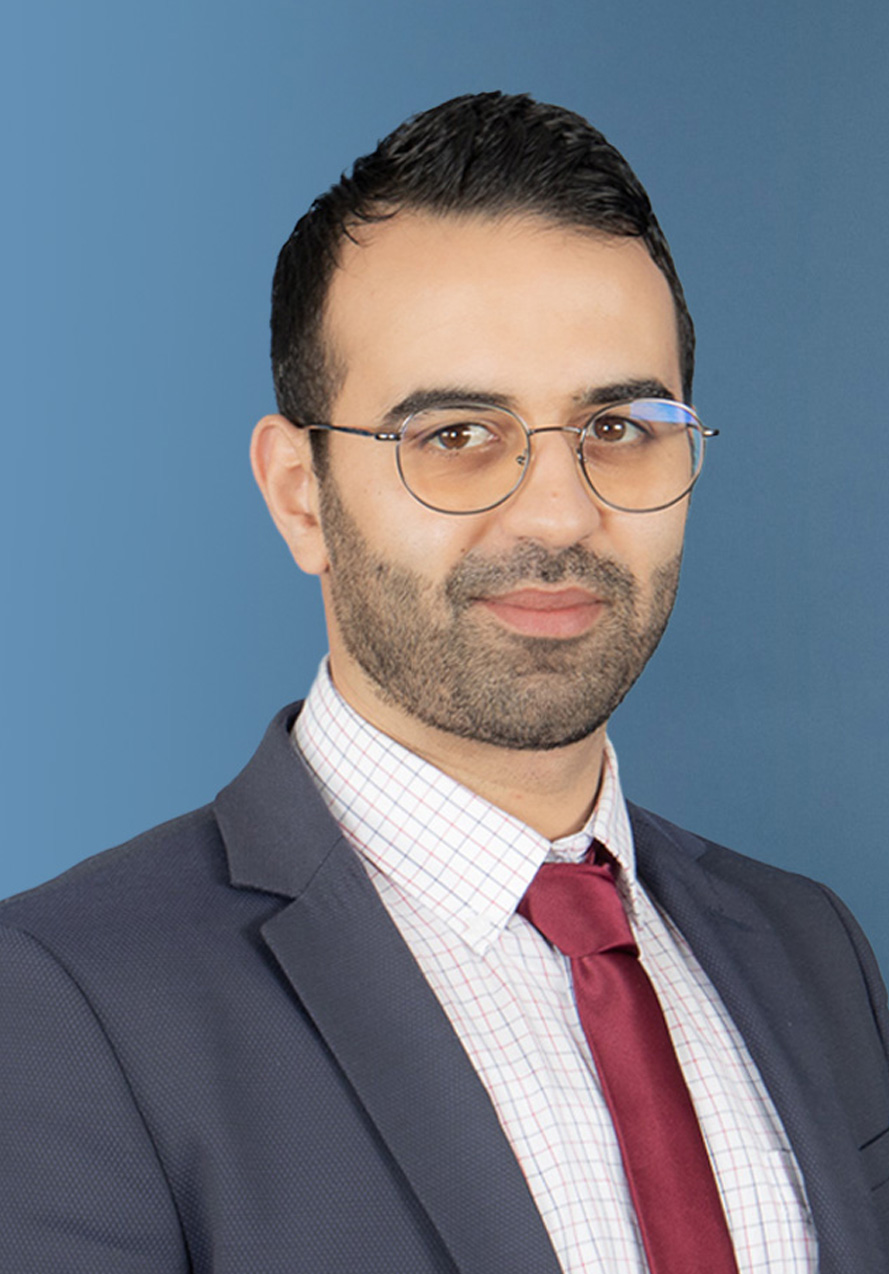
Badr Mandri
Economist
Badr Mandri is a Senior Economist at the Policy Center for the New South (PCNS), after an experience at Morocco's Haut-Commissariat au Plan (HCP). His research focuses primarily on macroeconomics, commodity markets, and development economics, having notably directed a collective volume on human capital. He also serves as an executive trainer at Mohammed VI Polytechnic University (UM6P), delivering specialized programs on public finance and fiscal policy for public sector professionals.Badr Mandri holds a Master's degree in Applied Economics from Mohammed V University in Rabat. ...

Ugo Panizza
Professor of International Economics at the Graduate Institute Geneva (IHEID) and Director of the Institute’s Centre for Finance and Development
Ugo Panizza is Professor of International Economics at the Graduate Institute Geneva (IHEID) and Director of the Institute’s Centre for Finance and Development. Ugo Panizza has been a Visiting Professor at the Institute since 2008, a position he held in addition to being the Chief of the Debt and Finance Analysis Unit at the United Nations Conference on Trade and Development. He is the Director of the Center for Finance and Development, Director of the International Centre for Monetary and Banking Studies (ICMB), Vice President and Fellow of CEPR, Fellow of the Fondazione Einaudi, and Editor of International Development Policy. Previously, he worked at the Inter-American Development Bank and the World Bank, alongside holding teaching and research posts at the American Un ...

RELATED CONTENT

  • September 28, 2026
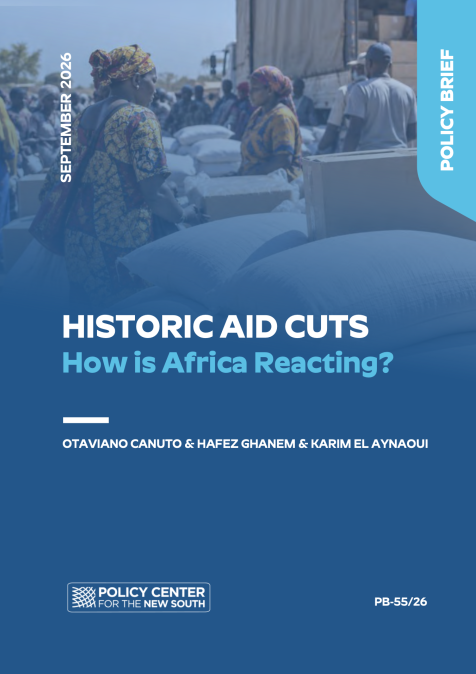
    This paper was initially published in French on the website of the Fondation Jean-Jaurès. There was a historic decline in Official Development Assistance (ODA) in 2025. Foreign aid to developing countries from members of the OECD-DAC fell by some 23%, the largest decline on record and the second consecutive annual decline. Aid to Africa fell by more than 25%. The International Monetary Fund (IMF) described this decline in ODA to Africa as “a shock like no other.” It differ ...
  • Authors
    Hicham Kasraoui
    September 2, 2026
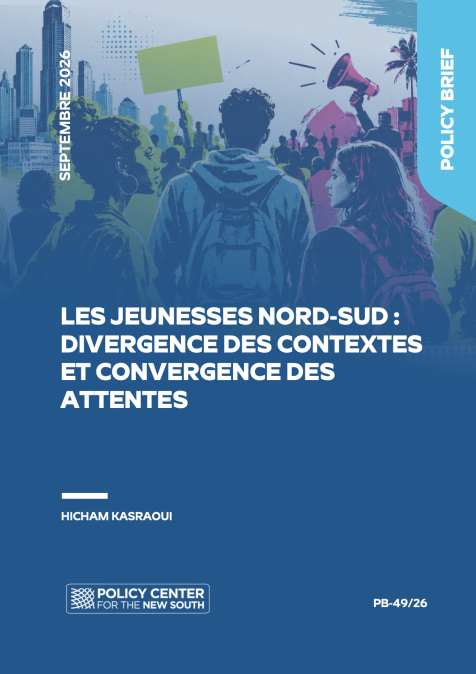
    Dans un contexte marqué par la superposition des crises sanitaires, géopolitiques, économiques, technologiques et climatiques, les jeunesses du Nord et du Sud évoluent dans des environnements distincts mais convergent progressivement vers un ensemble commun de préoccupations. Malgré des niveaux de développement et des trajectoires historiques différents, elles font face à des défis similaires : incertitudes croissantes sur l’avenir, difficultés d’insertion professionnelle, accès com ...
  • Authors
    Hicham Kasraoui
    September 2, 2026
    Amid overlapping health, geopolitical, economic, technological and climate crises, young people in the North and South are evolving in distinct environments that are progressively converging toward a shared set of concerns. Despite differing levels of development and historical trajectories, they face similar challenges: growing uncertainty about the future, difficulties entering the labor market, complex access to housing, fragile mental health, territorial inequalities and ecologi ...
  • April 13, 2026
    This episode delves into Morocco’s healthcare system, tracing strides in maternal and child health, vaccination, and the quest for universal coverage. Morocco’s COVID-19 response, alongside initiatives like TADAMON and telemedicine, showcases innovation and resilience. Yet, gaps remain,...
  • July 18, 2023
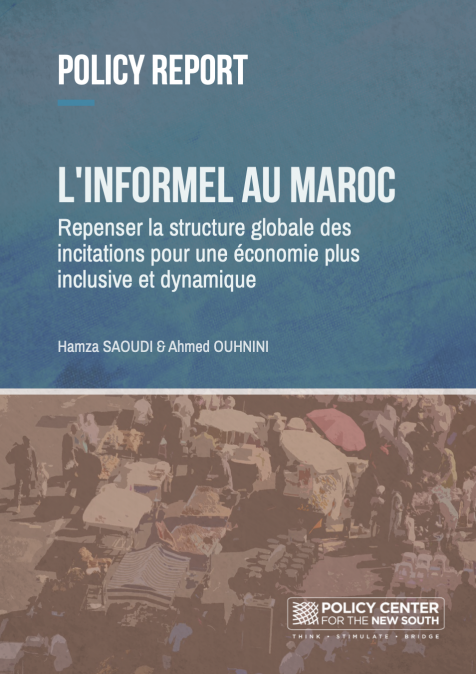
    Le secteur informel est une composante essentielle de l'économie marocaine, employant une large partie de la population, mais nuisant à la productivité, aux recettes fiscales de l’État et à la croissance économique à long terme. Sur la base de la définition adoptée dans cette étude et qui définit les travailleurs informels comme étant ceux qui ne sont pas couverts par les régimes contributifs de sécurité sociale de la Caisse nationale de sécurité sociale (CNSS) et d ...
  • October 7, 2022
    “The debate on the viability of industrial policy design based on the fragmentation of global value chains, from a cost optimization perspective, did not arise first in the wake of the Covid-19 crisis but was present long before. This industrial policy design was justified by the great development of logistics and transport across the world’s industrial clusters, which allowed just-in-time manufacturing to become the main adopted production model. However, the disruption of logistic ...