Publications /
Policy Paper

Back
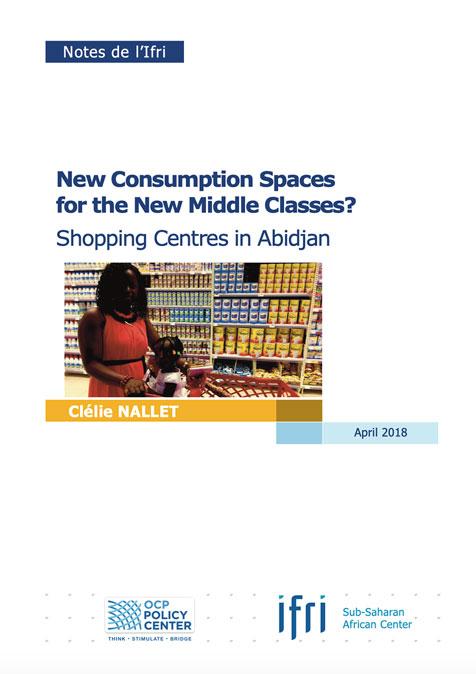
New Consumption Spaces for the New Middle Classes ? Shopping Centres in Abidjan
Authors
Clélie Nallet
April 23, 2018

Since 2011 and the end of the post-election crisis, Côte d’Ivoire has returned to impressive economic growth. The country and its capital are drawing attention from a growing number of investors, and the “Abidjanian middle classes” are widely publicised and sought after. At the same time, Abidjanian consumption spaces have become particularly diversified and transformed. Abidjan provides many options for consumers who are operating in a competitive environment with a wide selection in terms of places, products and services. The new shopping centres are commonly associated with the middle class. But what realities and social developments do they really represent?

RELATED CONTENT

  • Authors
    Hajar Kabbach
    March 9, 2023
    Gender disparities in the labor market persist as a serious challenge, resulting in lower participation rates for women than men. This gender gap in labor force participation varies considerably across regions, with female participation rates consistently lagging men. After some progress during the last few decades, the multiple crises faced by the global economy in recent times – pandemic, the war in Ukraine, rising risks of climate change, and slowing growth after high inflation ...
  • November 1, 2022
    يعتبر تعميم الحماية الاجتماعية كدعامة من دعامات نموذج الدولة الاجتماعية التي نلاحظ ملامحها بشكل متزايد منذ الأزمة الصحية. ونذكر أن هذا الورش المجتمعي يهدف إلى إرساء منظومة تضامنية إجبارية بغية توفير الحماية للجميع وصيانة حقوقهم بالإضافة إلى تيسير ولوجهم إلى الخدمات الاجتماعية والصحية في...
  • August 4, 2022
    Dans cet épisode d’Africafé, Gilles Yabi analyse les enjeux des inégalités en Afrique et les moyens de palier à ce manquement des économies Africaines. En compagnie de Hamza Saoudi, cet épisode passe aussi en revue les politiques publiques mises en œuvre par les Etats Africains pour com...
  • Authors
    March 9, 2022
    It was a grey day with a drizzle here and a drizzle there when mourners gathered at St George’s Cathedral in a usually sunny Capetown to pay their last respect to the Arch Bishop Desmond Tutu, the moral force against Apartheid struggle in South Africa was subdued and thoughtful as human beings when death and a rendezvous with eternity have been called. South Africa’s president Cyril Ramaphosa led his nation and the world in remembering Tutu. He described him as “our moral compass a ...
  • Authors
    February 17, 2022
    Their boat-if you name a large rubber pumped up like a giant tire, was rocked by waves, and the engine halted its movements. On November 24, all the 29 passengers tried to reach coastguard stations in France and England via their cell phones few minutes between life and death. No one answered, and when finally contact was established by another, still floating migrant boat, witnessing the tragedy in the making (New York Times December 14, 2021), they were asked to pinpoint their l ...
  • Authors
    December 31, 2021
    Xenophobic violence against minorities and non-nationals has erupted periodically in different parts of Africa: against Somalis in Kenya, Nigerians in Ghana, Chadians in Libya, and Asians in South Africa. Scholars have offered various explanations for these outbursts of violence, focusing on inequality or how simultaneous market reforms and democratization can unleash resentment against “market- dominant minorities.” Others see the violence as linked to elections, noting how politic ...
  • September 24, 2021
    In July 2021, the United Nations issued a condemnation against the “dramatic rise” in attacks against “descent-based slaves” in Mali, calling the violence “unacceptable”[i]. The statement was in response to a tragic episode in the eastern region of Kayes, where landowners using machetes and rifles assaulted a group of indentured laborers to prevent them working on the landowners’ fields. Tomoya Okobata, the UN's Special Rapporteur on Contemporary Forms ...